Archive for May, 2008
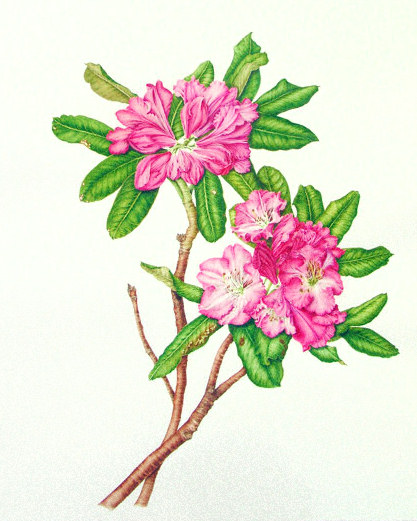
Rhododendron
macharya :: May.28.2008 :: Rhododendron :: Comments Off
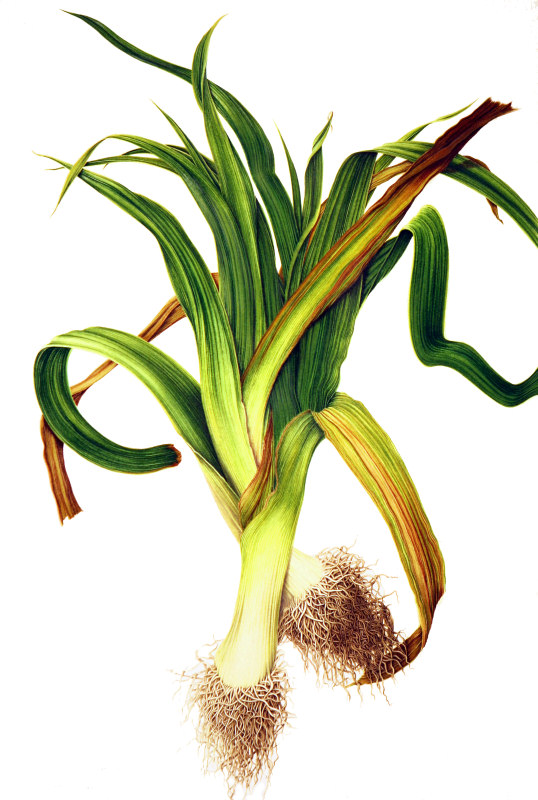
Allium porrum
The leek, Allium ampeloprasum var. porrum, also known as Allium porrum, is a vegetable which belongs to the same family as onions and garlic.
In Greek ampel means a grape vine and pras means leek, resulting in epithet—the leek of the vineyard.
Dried specimens, wall etchings and textual fragments at archaeological sites in ancient Egypt and Mesopotamia have led to the conclusion that leeks were cultivated as a food source from the 2nd century B.C.E. See more »
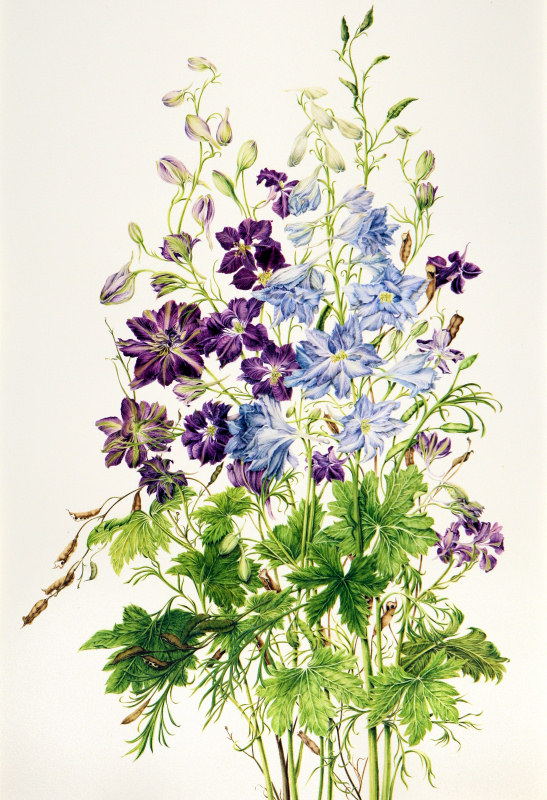
Consolida ambigua & Delphinium hybridum
Delphinium
Consolida ambigua (Larkspur)
The shape of the nectary reminded ancient Greeks of a dolphin’s nose, hence the plant’s name, from the Greek word delphis for dolphin. The flower’s resemblance to a lark’s claw led to the common name of larkspur in England where numerous species and cultivars are popular in gardens and where annual Delphinium Championships are held for amateurs and experienced enthusiasts. See more »
macharya :: May.28.2008 :: Delphinium :: Comments Off
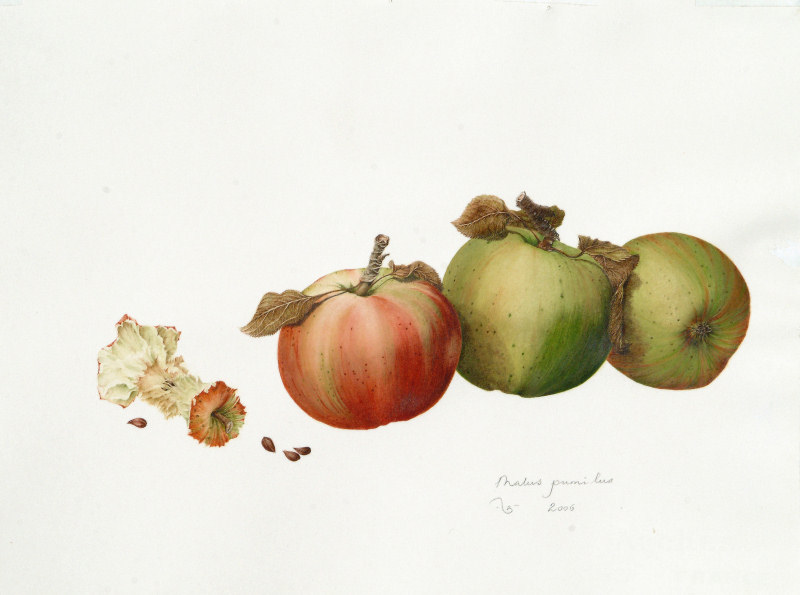
Malus pumilus 1
Atalanta, the warrior huntress of Greek mythology, was the swiftest mortal of her time. When her father insisted upon her taking a husband she was distraught because she had been warned by the Delphic oracle against marriage. So she laid a condition. Any suitor must win her in a footrace or else forfeit his life, and so many an unfortunate died as a consequence. See more »
Andrejs :: May.28.2008 :: Malus pumilus :: Comments Off
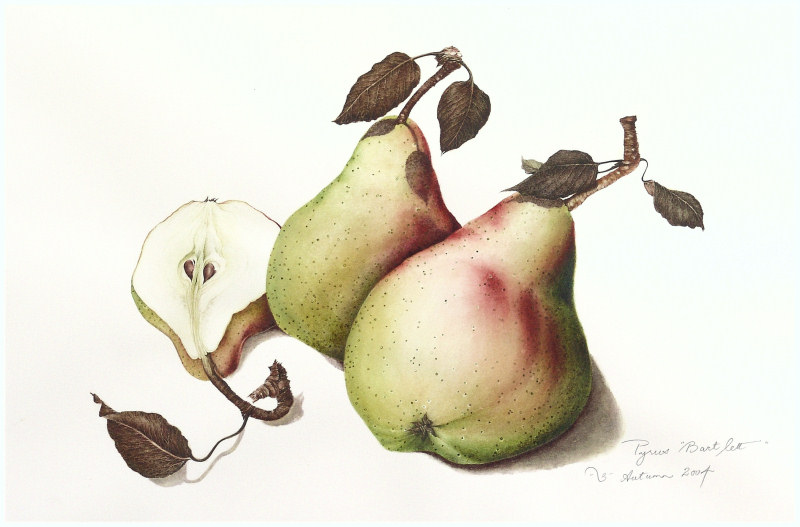
Pyrus communis v. “Bartlett”
The image that instantly comes to mind at the mention of a pear is a distinctive shape, color and scent — the familiar contours of a gold-green Bartlett. Many varieties of pear trees are native to parts of Asia and Europe, but how and when did the Bartlett come by its name and earn its popularity in the new world? It’s quite a story! See more »
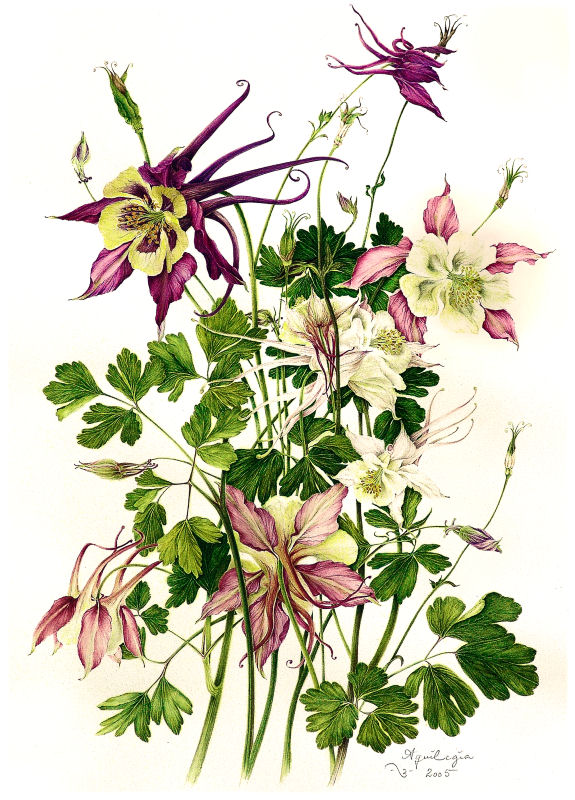
Aquilegia
Various explanations exist for the Latin name of the columbine. The distinctive spurs of the flower are reminiscent of an eagle’s talons; the elongated petals, shaped like a goblet, resemble water collectors; they also suggest five doves encircling a water fountain. Clearly to an attentive observor this dainty yet complex flower calls to mind strange images. See more »