SOLD
Prints available
SOLD
Prints available
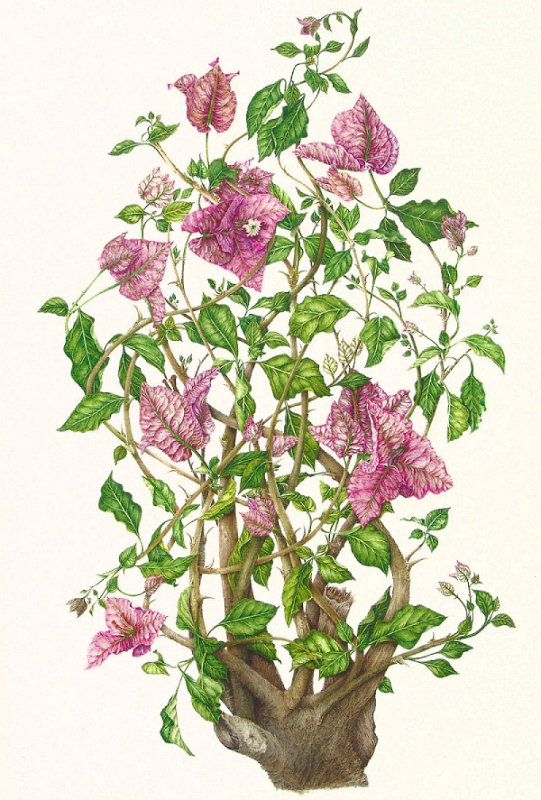
Bougainvillea was discovered by French botanist Philibert Commers on the coasts of Brazil, in the 1760’s. Commerson was was an avid collector of botanical specimens and sometimes called a lunatic and a magpie of exotic plants. Despite being a poor sailor he voyaged around the world in his botanical quest. In 1766 Louis-Antoine de Bougainville (1729-1811), lawyer, mathematician, and explorer, joined the French army to serve with Montcalm in Canada so that he would not have to follow his father’s profession of notary.
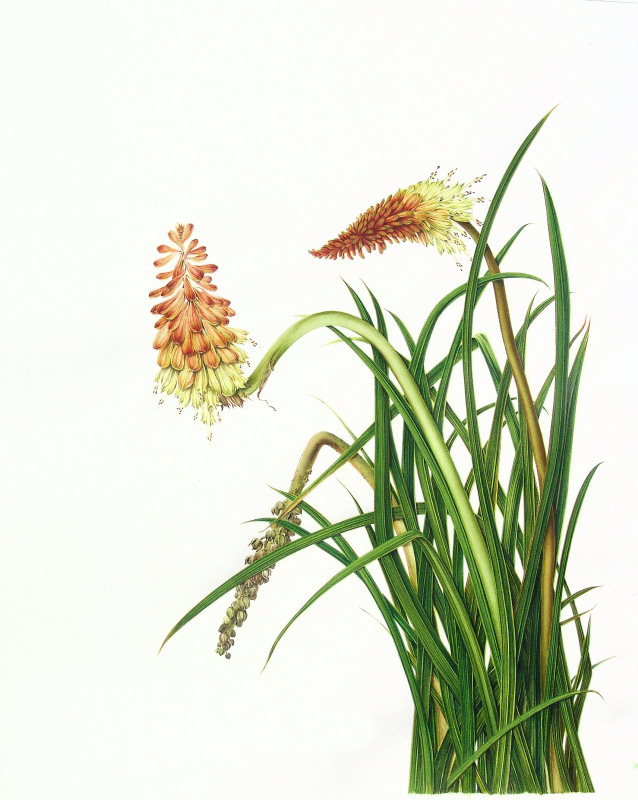
Red Hot Poker, Torch Lily, Tritoma
2008
Prints available
The plant’s original name Tritoma comes from the Greek for thrice-cut, a reference to their long leaves with very clearly defined three surfaces. Uva is Latin for bunch of grapes, describing the inflorescent arrangement of the blooms.
SOLD
Prints available
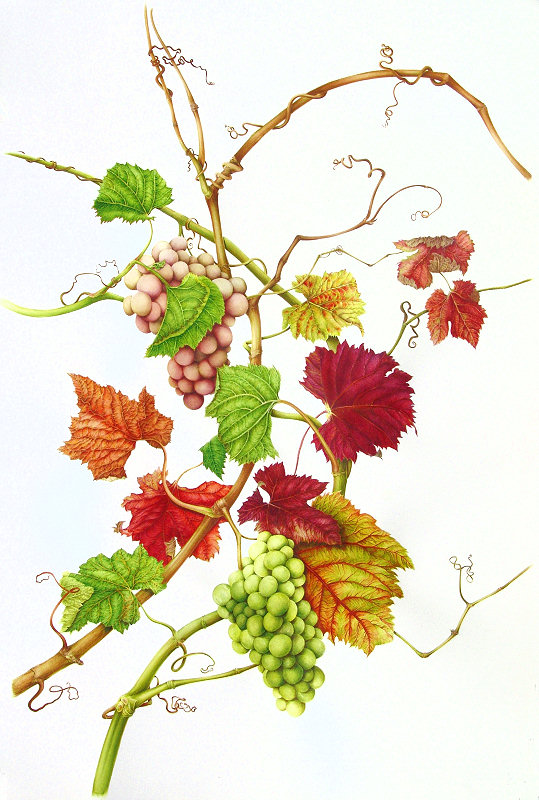
Wild grapes are found all over the world but viniculture probably originated in Mesopotamia, spreading to temperate zones in the west and north with well-drained soil. Ancient Egyptians, Greeks and Romans all treasured the grapevine, experimenting with and developing skills for wine-making. Ancient burial sites, most famously the tomb of Tutankhamun, housed several amphorae labeled with vintage, variety and the vintner’s name — testimony to the high esteem of both product and the skill of the artisan.
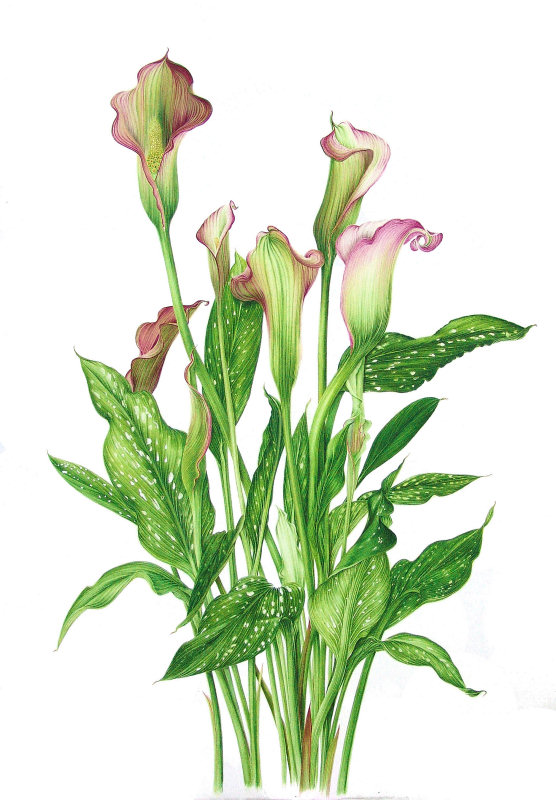
SOLD
2008
Oddly enough the Calla is not a member of the lily family. It belongs to the Araceae, and its common relatives are philodendron, aglaonema, caldium, anthurium, jack-in-the-pulpit.
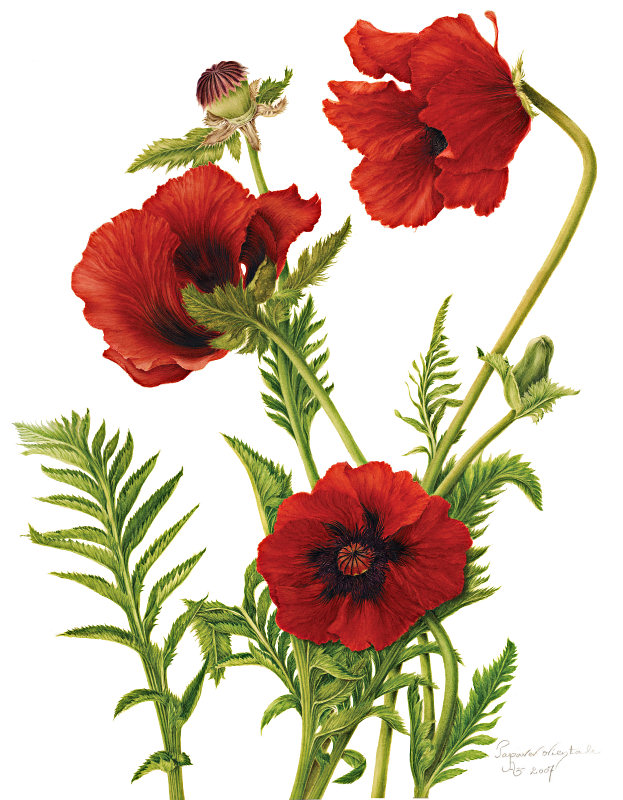
SOLD
2007
Prints available
On a mid-May morning in my unkempt garden a brilliant burst of red struggled free from fuzzy green confines, like a crumpled chiffon dress out of a tightly packed valise. The creased item flared its skirts flamenco-style, forcing my paints and brushes to pay it homage.