Prints available
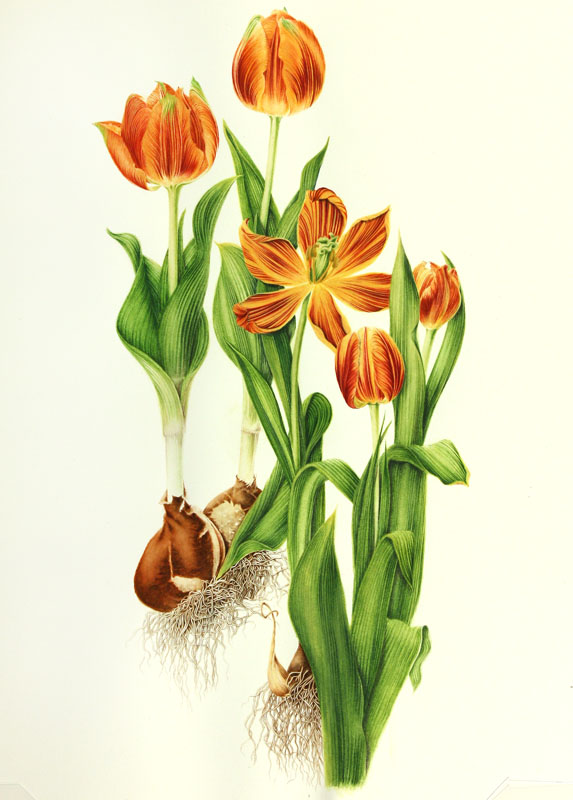
Guess which wild flower native to Central Asia took western Europe by storm in the 17th century, built and collapsed fortunes, served as currency, led some to murder, others to suicide? None other than the tulip, of course!
Prints available
Guess which wild flower native to Central Asia took western Europe by storm in the 17th century, built and collapsed fortunes, served as currency, led some to murder, others to suicide? None other than the tulip, of course!
SOLD
Prints available
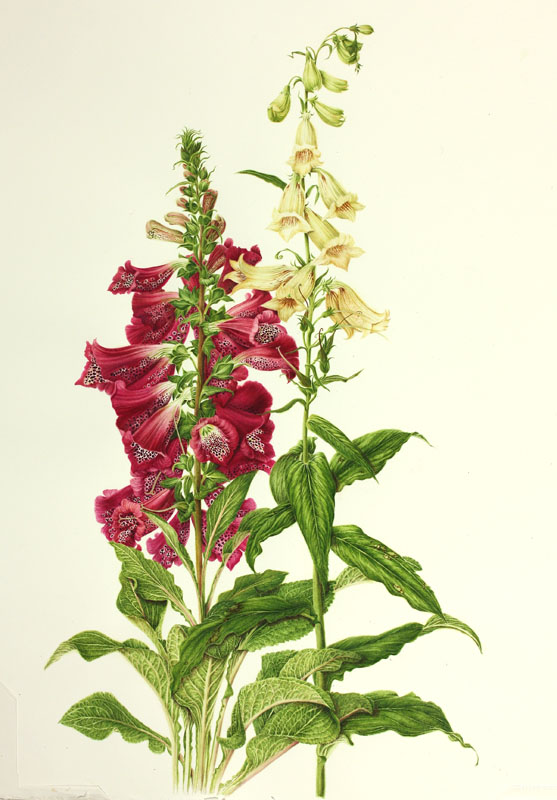
The plant takes its name from digitus, the Latin word for finger and was so called long before official Linnean nomenclature was the practice. The common English name, foxglove, may have originated from folk’s (woodland folk or faeries) glove. The elongated bell-shaped flowers so easily fit the tip of a finger that their resemblance to a glove or a thimble is unmistakable. In Germany, the plant was called fingerhut or thimble; in Ireland Dead Man’s Thimbles; in Norwegian, Revbielde, meaning “Foxbell,” the only specific reference to fox.
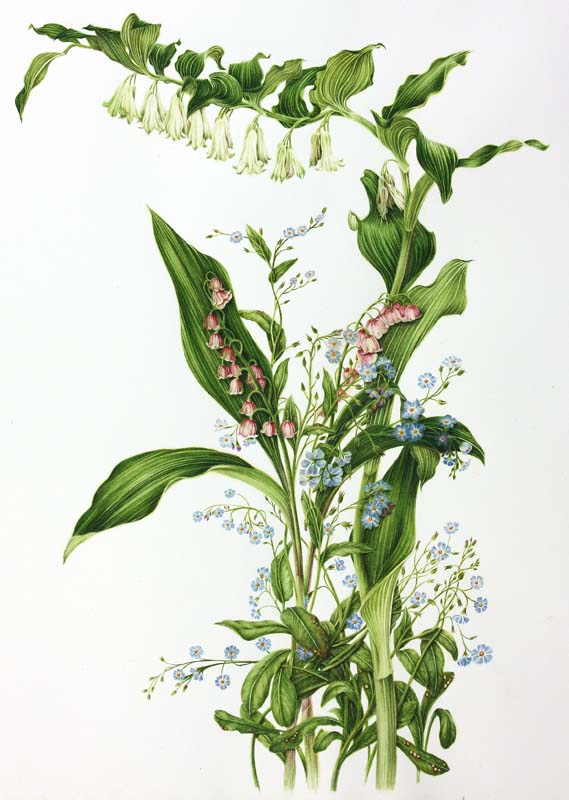
Convallaria majalis var. rosea (Pink Lily-of-the-Valley)
Myosotis scorpioides
Polygonatum commutatum
Prints available
From the Latin convallis for valley—a favored habitat for the plant—and majalis or belonging to May, this fragrant spring bloom derives its botanical name. Its other names are May Lily, Ladder-to-Heaven, Our Lady’s Tears but most popular of all is the lily-of-the-valley. Its flowers are usually white, although pale to darker pinks are less common but also popular.
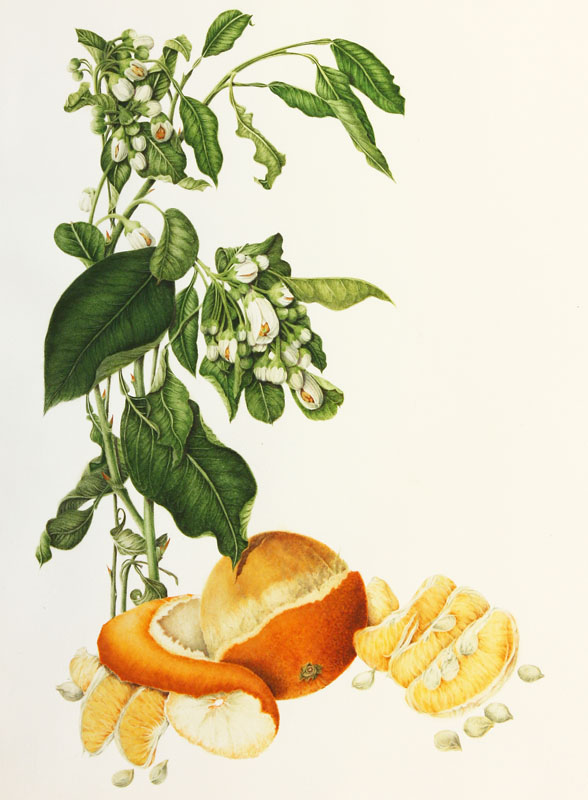
Valencia orange
Prints available
Mention “orange” and you instantly conjure up a host of associations—brilliant colors, a fresh, clean scent and a juicy explosion of tart, sweet, tangy flavors.