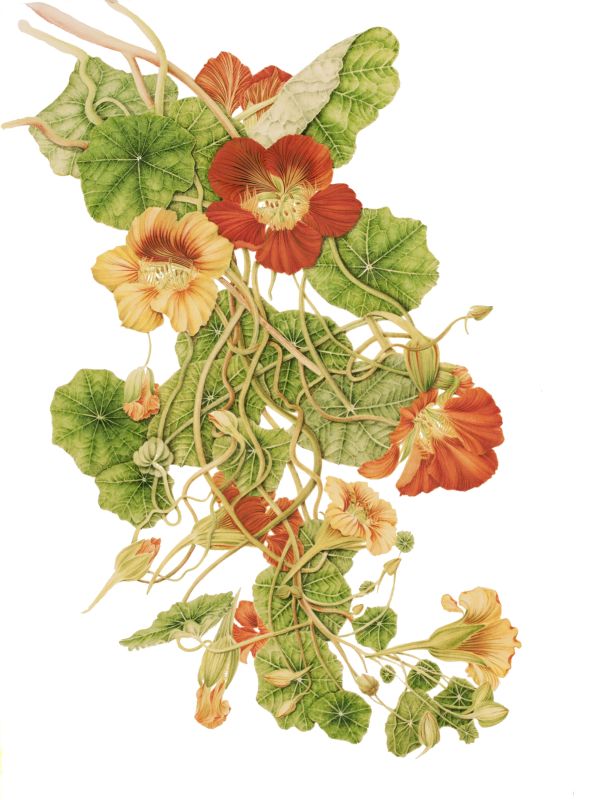
Nasturtium
2013
Prints available
Nasturtium
2013
Prints available
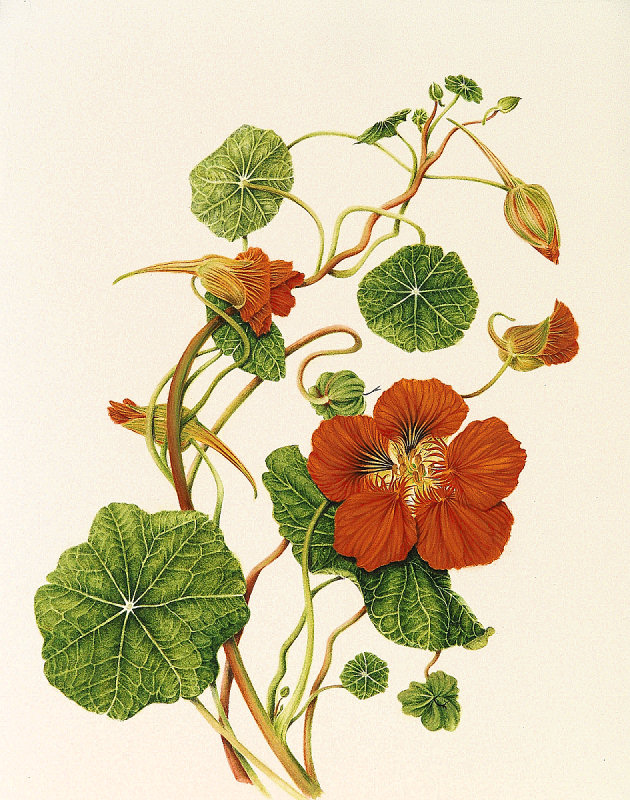
Nasturtium
To Linnaeus, the venerable giver of plant names, the broad circular leaves suggested battle-shields and the the flowers reminded him of helmets stained with blood. From the Latin for trophy, Tropaeolum, the plant derived its name. Its resemblace to the peppery taste and flavor of watercress, which actually belongs to the genus Nasturtium, Latin for pungency, led to its other name—Indian cress.
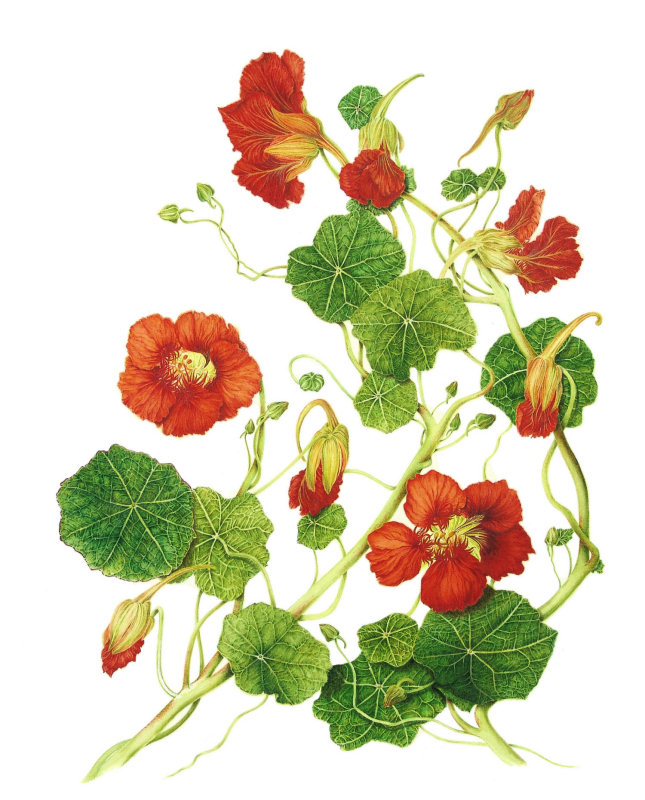
Nasturtium
SOLD
As a botanical painter I have a wish list, many miles long, of numerous plants I’d like to document each season. After our interminable, monochromatic northeastern winters when spring finally arrives I’m bursting with impatience to select my specimens and get to work. Most of the early plants I encounter in my neighborhood are various shades of white, pale pinks, pastel mauves — snowdrops, lily-of-the-valley, hyacinths, magnolias. Since botanical illustration is so meticulously detailed, commanding scientifically accurate visual information, it is, alas, painstakingly slow. So my wish list stays as long as ever!